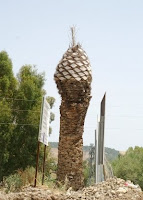
(Children, cover your eyes. Photo by JimenaPulse)
In October last year we published an item about the Red Palm Weevil, which elicited no response from the Council or anyone else, except an alarmed reader who tried to report the matter without success. Now it turns out Castellar has had to contract a specialist to eradicate the
picudo rojo from its palm trees.
We wonder if Jimena will have to do the same before it’s too late to save all the (expensive) new palms being planted.
Actually, it is no laughing matter. A report in EuropaSur calls the weevil “the most worrying pest in Spain” in terms of the country’s palm trees. Algeciras is another place with problems. Twelve of the sixteen palm trees on Plaza Alta are infected. Two dead trees have been replaced and the bare trunks of the remaining ten are still there. The Council detected the problem in 2005; by the middle of last year, some 400 palm trees in Algeciras were infected.
The Red Palm Weevil lays eggs inside the palm tree trunks so its larvae can feed off it, leaving holes that can be a metre long, thus killing the host tree. It is usually spread by human intervention in the transportation of infested trees.
(Update, 27/02/10: This poor old palm tree, which adorned one corner of the 'Dear Deer Roundabout' at the entrance to Jimena, came down shortly after the photo was taken. RIP)


