Showing posts with label LAW. Show all posts

Saturday, 25 February 2012

Clampdown on foreign registered vehicles

Gibraltar-registered vehicles are not exempt
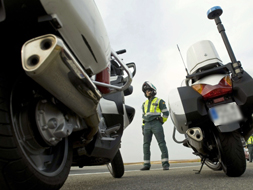
SPAIN Drivers will have noticed that the Guardia Civil Traffic Unit are stopping them more frequently. They should know that the local Guardia Civil are well aware of all the foreign registered vehicles in their area; they know how long a person has been living in the area, and whether or not they have foreign-plated car at the door. Below, you will find a summary of what the law says -and a few suggestions- about a foreign registered car, most of which the GC have until now not been bothered with much. Until now. We keep hearing about cars being towed away or confiscated at the roadside because they are now clamping down on these illegal vehicles. The law is not specific about Gibraltar-plated cars, but it must be assumed that their owners living on this side of the border  are covered by the same law.>>>

Thursday, 2 February 2012

Guardia catch hunters' illegal take in Jimena: eight stag heads

(Photo: Guardia Civil/Seprona)
Licences were only for does and young animals
JIMENA (Agencies) The nature protection unit of the Guardia Civil, SEPRONA, last Sunday confiscated eight stag heads at a shoot in Jimena de la Frontera. The stags had been shot shortly before the Guardia intervened as part of the usual control operations carried out during the hunting season. The hunters had permits that allowed them to shoot females and young deer, as there is a considerable over population in the area at present, but not males. The hunters will be taken to court.

Thursday, 19 January 2012

Junta amnesty for 90% of illegal building in Andalucía

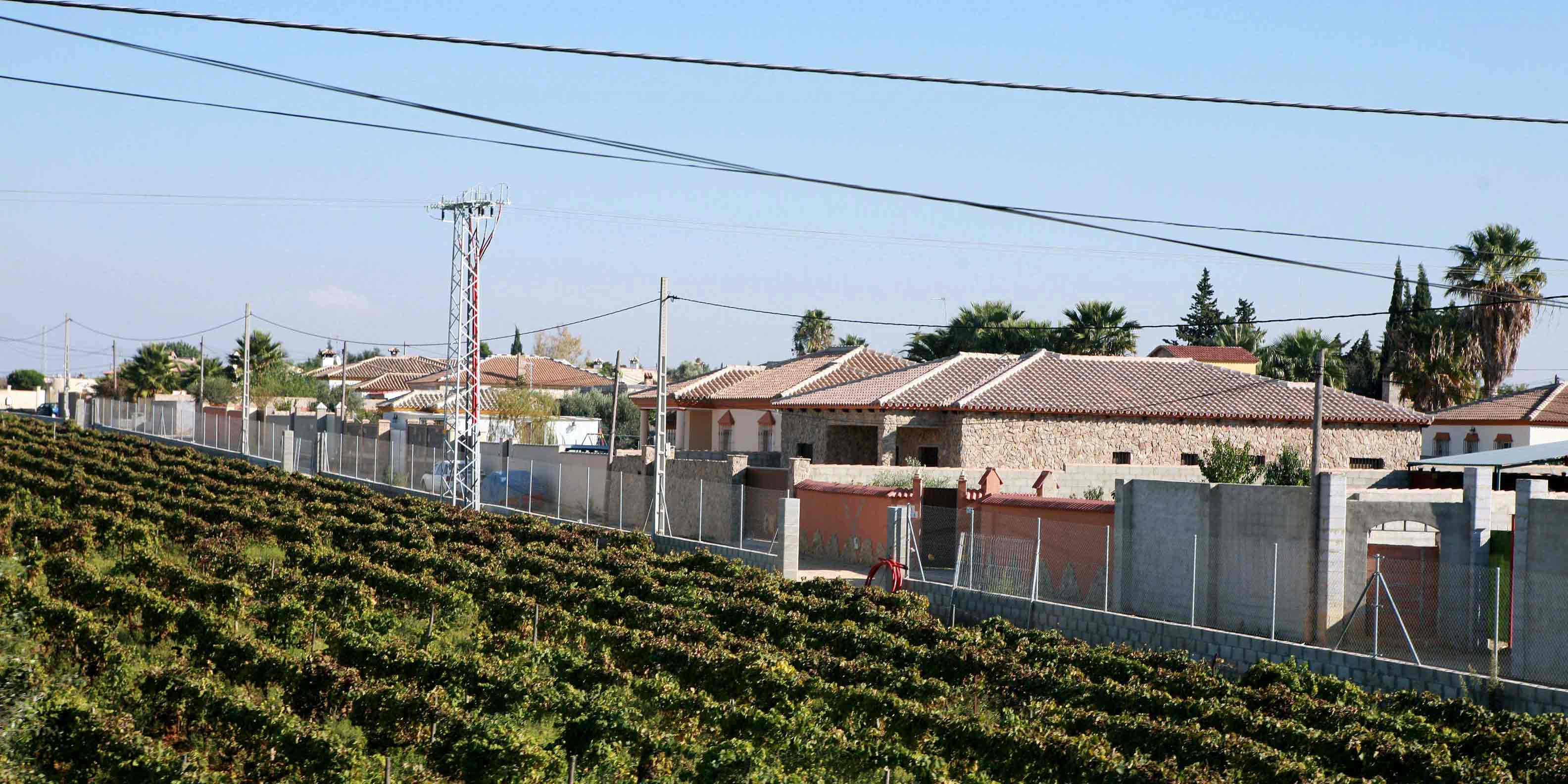
Illegal construction in Chiclana
Another 10% to remain under threat of demolition
ANDALUCÍA (Agencies) Nine out of ten constructions, be they individual homes or within an urbanization, that were constructed on what is called suelo no urbanizable, or restricted land, will be able to obtain property rights for their owners, after a decree was approved last week by the Junta de Andalucía's Government Council. The rest will be demolished unless otherwise instructed by a Court of Law. The announcement by the Junta's Councillor for Housing, Josefina Cruz Villalón, confirms what had previously been mentioned by the President of the Junta, José Antonio Griñán, during the State of the Region debate last June. In fact, there is no register of otherwise 'illegal' construction, except as listed in reports such as those carried out in the Axarquía region of Málaga, for example. So, with the help of aerial photography, the Junta has calculated that about 10% of the 250,000 'illegal' buildings can be made fully legal. Another 80% will not be officially 'legalized' but will have their circumstances approved so that they can legally obtain basic services such as water, power, etc.. The remaining 10% will not get any kind of approval or legalization and will be scheduled for demolition, unless otherwise directed by a court.>>>

Wednesday, 16 November 2011

RIP cigarettes as from tomorrow all over Europe

EUROPE (euroalert.net) As from 17th November 2011, once the new safety standards enter into force, national authorities will make sure that all cigarettes sold in the EU are of a type known as 'Reduced Ignition Propensity' (RIP). This means cigarettes which self extinguish when left unattended and which are thus less likely to cause fire. According to the European Commission, the number of fatalities caused by fires can be reduced by over 40% with the introduction of 'Reduced Ignition Propensity' (RIP) cigarettes. Therefore, once the new safety standards are published in the EU Official Journal, all cigarettes sold in Europe will have to comply with these measures. The Commission remains committed to a "smoke-free Europe" and address this issue via its on-going EU "Ex-smokers are unstoppable" campaign, which was launched in July 2011.>>>

Wednesday, 8 June 2011

Surely this is not legal!

(Photo: JimenaPulse)
JIMENA This sign appeared recently on Jimena's most picturesque and most-photographed street, San Sebastian. Local law does not allow signs to go up in the Historic Quarter of Jimena without a great deal of paperwork and bureaucracy, much of which has to be dealt with in Cadiz and Seville, given that the old part of the village is supposedly protected from this kind of urban terrorism. Another factor is that there is supposedly a unit of the local police that should be dealing with this sort of thing. Yet another is the lack of consideration or care by too many residents for their village, its history and its attractiveness to outsiders. We believe this sign should be taken down immediately, don't you?

Thursday, 6 January 2011

How's the smoking ban doing? Where can you smoke? Where not? What could you be fined?

SPAIN (Source: El Pais.com) The majority of smokers are abiding by the new anti-tobacco law, which came into force on Sunday. Spaniards were "reasonably" compliant with the ban on smoking in enclosed public spaces, according to Dionisio Lara, of the Spanish Service Industry Federation, who reported that drinkers had shifted to outdoor tables en masse. Regulations forbidding smoking within 100 meters of health centers were less rigorously observed and smokers could be seen puffing away at the entrance to various Madrid hospitals.(See the full article on CampoPulse, with all the information on where you can and cannot smoke, what the fines are, etc.)>

Monday, 20 December 2010

El Corchado owners can now legalise their properties

(Agencies) Some 40 owners of properties in the El Corchado section of San Pablo de Buceite, of Jimena, will now be able to buy the land on which their homes sit, as well as get proper title deeds to their properties. The matter has been under scrutiny for over 50 years, the problem being that the properties were on a Cañada Real, or common cattle pass. With the process begun officially in the late 1990s, the section on which the properties stand has now been separated from the Cañada, thus allowing for the regularisation of title documents as well as no further problems in obtaining building licences. The municipal delegate for San Pablo, Andrés Beffa, has requested a meeting with the Treasury delegate in Cadiz to obtain information as to the procedure for the proprietors to buy their land.

Wednesday, 26 May 2010

New traffic laws came into effect yesterday - be warned!

Many of you will have received a folder through the post with the logo in the image, left. It is an explanation of a reformation of the traffic laws that came into effect yesterday, ostensibly 'Simpler', 'Easier' and 'Fairer'. We have gone into the Dirección General de Tráfico website (www.dgt.es), as suggested, and discover that there is more to the new laws than it says in the folder. We have asked TheTranslationPeople to help but they are busy right now - though they might not be averse to a bribe. (Please consider: When was the last time you made a donation to this site?)

Monday, 18 January 2010

How many 'illegal homes' are there in Spain?


You've heard about Len and Helen Prior's €300,000 home being demolished in Vera, Almería, as an example of 'illegal building'. This is a report on the day it happened on January 9, 2008. We don't feel we're late with the news because, alas, this kind of thing could be happening elsewhere right now or in the near future. How many 'illegal homes' could there be in the Campo de Gibraltar, foreign- or Spanish-owned? (See related items here)

Saturday, 24 March 2007

EU residents in Spain no longer need residence card

SPAIN (Pres release) Royal Decree 240/2007, approved by the Council of Ministers on February 16th, establishes that EU citizens will not be issued with residencia cards as from March 28th. However, the decree does require that EU citizens planning to reside in Spain for three months or more must register in person at the Oficina de Extranjeros – usually a section of the National Police headquarters – in their province of residence or at specially designated police stations. They will receive a certificate stating name, address, nationality, NIE number and registration date. Those already possessing residence cards do not have to go through the above procedure until their card comes up for renewal. In any case, it is always advisable – and stated in law – to carry identification at all times.